
The shortcut just closed
For years, getting found online as a doctor came with a shortcut. Pay a healthcare platform, move up its list, and the bookings follow.
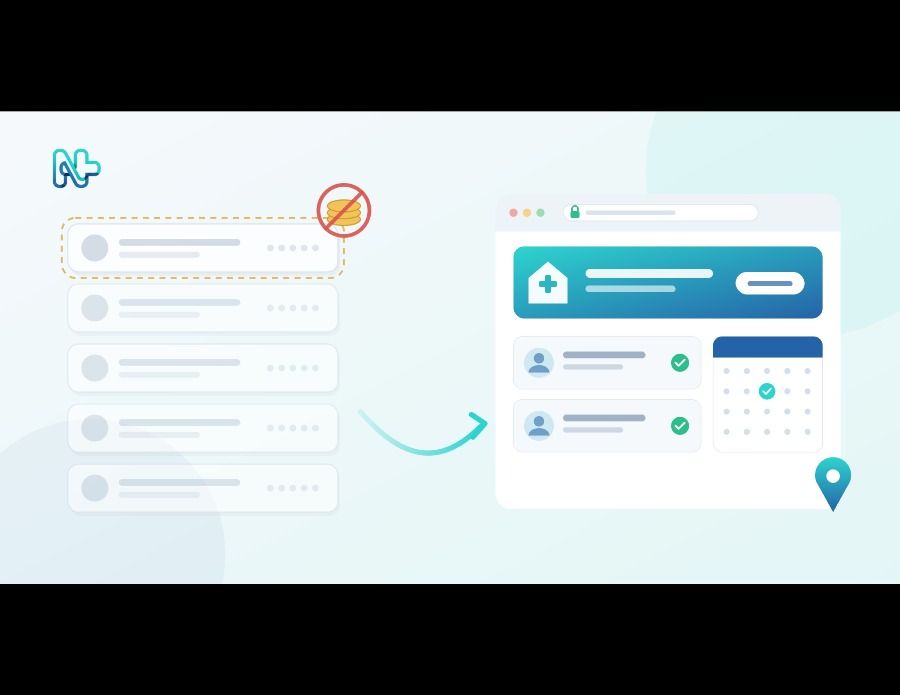
On 6 October 2026, the National Medical Commission closed that shortcut. Its new guidelines say platforms that list doctors must not rank them for money, and must be transparent about how listings work.
This isn't a reason to panic, and it doesn't mean platforms are going away. But if part of your patient flow depends on paid visibility, it's worth understanding what changed and where to put your effort instead.
What the NMC actually changed
The NMC's Ethics and Medical Registration Board issued the Guidelines on Ethical Advertising and Public Communication by Hospitals/Medical Institutions and Registered Medical Practitioners on 6 October 2026. They took effect the same day, with no grace period (official notice; TeamLease RegTech).
The parts that matter most for getting found online:
- No paid ranking of doctors. Platforms that host doctors must follow NMC's advertising norms, must not rank doctors for payment, and must be transparent about their listing practices (Medical Dialogues).
- Factual information is allowed. Clinics may publish objective, verifiable details: name, contact details, departments, diagnostic facilities, emergency services, accreditation and fees.
- A doctor directory on your own website is treated differently from an ad. A hospital site listing its doctors' names, recognised qualifications, specialties, registration details and availability serves a patient-information function, and the guidelines treat it as distinct from paid promotion.
- No superlatives, testimonials or AI promotion. "Best doctor", "No. 1" and "100% success" are out, patient testimonials can't be used for promotion, and AI-generated promotional campaigns are prohibited.
The penalties for doctors are graded, and are applied by the State Medical Council after a show-cause notice (Medical Dialogues). A first violation brings a warning and mandatory ethics training, and a second brings censure and a monetary penalty. A third can mean suspension of registration for 3–6 months.
Serious violations, such as misleading cure claims, inducing patients or digital mass solicitation, carry a suspension of 6–12 months. Repeated violations can mean removal from the medical register for 1–3 years.
Hospitals and institutions are dealt with separately, under the Clinical Establishments Act or the applicable state law.
This is a summary, not legal advice. Read the notification itself, or ask your State Medical Council, before changing anything significant.
What it means if you pay for visibility
Most clinics on marketplace apps pay for some mix of a subscription, a per-booking cut and a "premium" listing. The premium part is what the new rule targets. If a platform can no longer sell a higher position, that line on your bill buys you less than it used to.
Three practical consequences follow.
Rankings will be reshuffled. Platforms will have to sort doctors by something other than payment: distance, availability, specialty, perhaps patient feedback. You may move up or down, and you won't control which.
You'll still pay for the patient you already had. If you pay per booking, a patient who first found you on a platform and keeps rebooking through it can cost you the same every visit. Paid visibility used to hide that cost behind growth. Without it, the cost is easier to see.
Your listing still has to be accurate. Platforms remain, and so do your profiles on them. Wrong timings, an old phone number or an exaggerated description on a platform listing is still public communication about your practice.
None of this means leaving every platform tomorrow. It means the money and attention you spent on ranking higher is better spent on something you keep.
What still works: factual, verifiable, and yours
Read the guidelines from a patient's side and the logic is simple. Patients should choose a doctor based on accurate information, not on who paid more. So what works now is being accurately and completely described, in places patients, search engines and AI assistants can check.
1. Your own website, as a factual directory. The guidelines specifically recognise a hospital website listing doctors' names, qualifications, specialties, registration details and availability as patient information rather than advertising. That is a clinic website done properly: who practises here, what they're qualified in, when they're available, and what it costs.
2. Your Google Business Profile. Correct name, address, phone number, hours and services. Accurate listings are explicitly permitted, and this is often the first thing a patient sees. Keep it consistent with your website, down to the timings.
3. Education, signed properly. Health education is still allowed. A short, accurate explainer on a condition you treat helps patients and builds your site's search ranking over time. Put it on your own domain, under the doctor's full name, qualifications and registration number, not on a platform that owns the page.
4. Being the answer AI assistants find. Patients increasingly ask ChatGPT or Gemini which clinic to visit. These tools favour clear, consistent, factual information they can verify across sources, which is exactly what the new rules push you towards. (We wrote more about this in How to Build a Clinic Website Patients and AI Assistants Trust.)
5. Taking care of the patients you already have. Reminders, easy rebooking and a record that remembers them. Retention isn't advertising, and it's where a practice's growth compounds.
A checklist for this month
Most of this takes an afternoon, and none of it needs new software.
- Search yourself. Google each doctor's name and the clinic's name. List every platform, directory and map listing that shows up, including ones you never created.
- Fix what's wrong. Correct timings, phone numbers and addresses everywhere you can. Remove personal mobile numbers that shouldn't be public.
- Strip the superlatives. Remove "best", "No. 1", "100% success" and similar claims from your website, social bios, signboards and listings.
- Take down testimonials used as promotion. That includes patient videos, quote graphics and "what our patients say" sections.
- Add registration numbers. Every doctor profile and every educational post should show the doctor's full name, qualifications and registration number.
- Publish your fees and facilities. Consultation fees, departments and diagnostic facilities are factual information patients want, and the rules allow it.
- Claim your Google Business Profile if you haven't, and make it match your website exactly.
- Review your platform spend. Look at what you pay each platform, what part of it was for higher placement, and how many of those patients came back to you directly.
Where NeftX fits
If you don't have a website you own yet, this is the gap the new rules expose. A NeftX website runs on your own domain and works as the factual directory the guidelines describe: your doctors, their qualifications and registration details, your timings, your services and fees.
The difference from an ordinary website is what happens after a patient decides. They book on your site, and the appointment lands straight in your OPD calendar, with no re-typing and no commission. With the WhatsApp add-on, confirmations and reminders go out from your own WhatsApp Business number, not from someone else's app. When the patient comes back, their history is already there.
The new rules reward clinics that are easy to verify and easy to return to. That's worth building whether or not you ever use NeftX.