
Most doctors build their websites to look like medical encyclopedias—filled with lengthy essays on every disease, symptom, and treatment they handle.
Here is the harsh reality: Patients don’t read them.
When a patient is in pain or needs a specialist, they search for exactly three things:
"Doctor near me"
"[Specialist] near me"
"Doctor for [symptom] near me"
They aren't looking for an education; they are looking for a solution.
The Trap: Traffic vs. Conversion
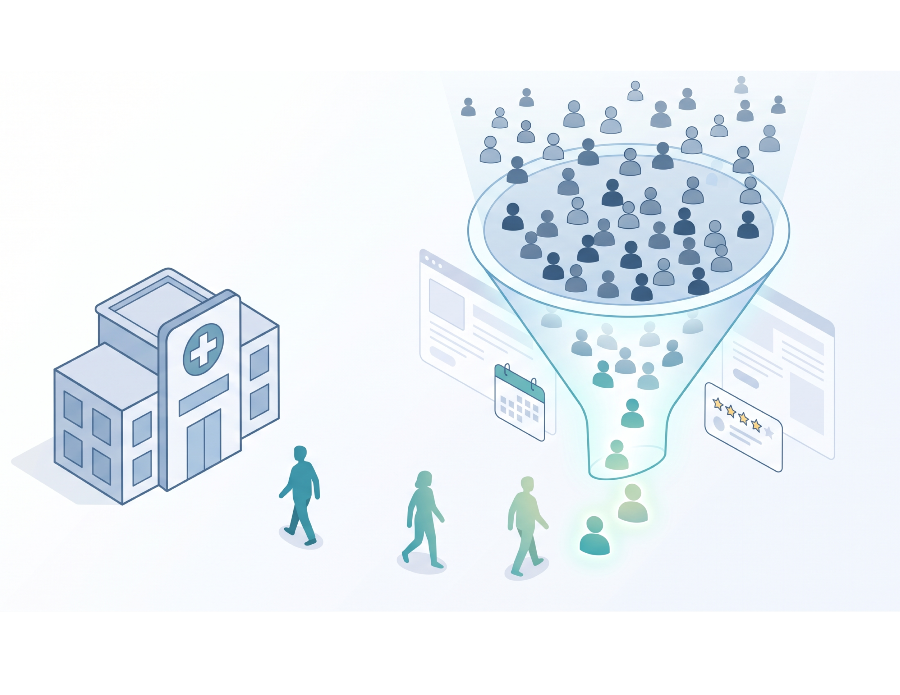
A lot of clinics obsess over getting thousands of website visitors. But traffic is just a vanity metric. Conversion is the only metric that matters. Having 1,000 people visit your page means absolutely nothing if zero of them actually book an appointment.
To get that click, you must shift your focus from merely attracting eyeballs to actively building trust. If you want to turn website traffic into walking, breathing patients, you need to completely change your website layout.
Here is what your website actually needs to convert:
1. Front-and-Center Trust Metrics
Don’t bury your credentials on a hidden "About" page. The moment a patient lands on your site, they should see your qualifications, your years of experience, and the number of patients you have successfully treated.
2. A Clear "Why Us?"
Why should they choose your clinic over the one down the street? Highlight your convenience, your modern tools, or the specific way your doctors operate. Make it obvious.
3. Real, On-Site Patient Reviews
Patients are smart. They know external review platforms can be gamed. Embed actual, verifiable patient reviews and testimonials directly on your site to build authentic social proof.
4. Answer Before They Ask (FAQs)
Kill their objections and friction points immediately. List clear FAQs covering consultation fees, insurance, and what to expect on the first visit.
5. Show Your Face (The 1-Minute Video Rule)
People connect with people, not brick-and-mortar buildings. Put a message from the founder or lead doctor directly on the site. You don’t need an expensive production crew. Take out your mobile phone, record a 1-minute tip about a common symptom, and link the YouTube video directly to your site.
6. A Seamless Booking Experience
Your website shouldn't just be a digital brochure; it needs a functional patient portal where patients view reports, book appointments, and message providers directly. The product experience should be simple and direct — no bloat, no clutter.
The Golden Rule for Ads
Website traffic starts slow. You will eventually need Google Ads to scale, but do not spend a single rupee on ads until your website is fixed.
Running ads to a clunky, text-heavy website is like pouring water into a bucket with a hole in it. Fix the layout, build the trust, ensure your website with patient portal is connected directly to the HMS, and then turn on the ad budget.